Australian Hardwood
Engineered Timber Flooring
Engineered Timber vs Hybrid Flooring
Is Walnut Too Soft for Floors? The Janka Numbers, Honestly

Mark Hutchison
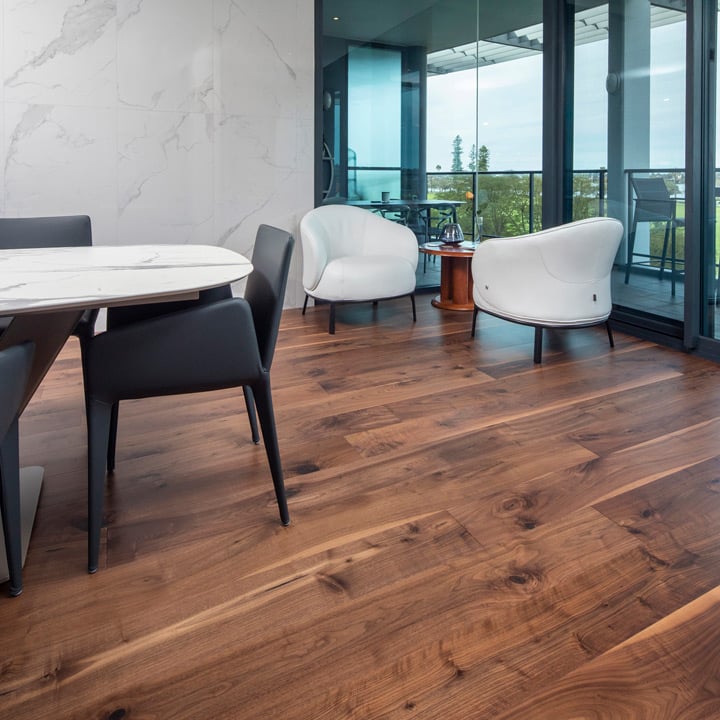
No, walnut is not too soft for floors. But it is softer than Australian hardwoods, and anyone selling it should say so before you buy.
American Black Walnut rates about 4.5kN on the seasoned Janka scale. Blackbutt sits near 9.1kN. Spotted Gum near 11kN. So the forum posts are half right. What they miss is what hardness actually protects against, what it doesn't, and why furniture makers have trusted walnut surfaces for three hundred years.
What the Janka test really measures
The Janka test presses an 11.18mm steel ball into a board and records the force needed to sink it halfway. That's it.
It measures resistance to indentation — a dropped saucepan, a stiletto heel, a chair leg dragged sideways. It does not measure wear. It does not measure durability or lifespan. Those are different properties and the number says nothing about them.
The Australasian Timber Flooring Association groups species into hardness bands and its guidance is that a moderately hard timber is adequate for most household use. Walnut sits in that moderately hard band.
Two more things the number can't tell you.
- Variation inside a species is large. Individual boards of the same timber can test well above or below the published average, so small differences between species mean very little in a real house.
- No coating changes hardness. A nine-layer finish resists scratching and staining. Dent resistance comes from the timber underneath, and no honest supplier will tell you otherwise.
What actually wears a floor out
Floors don't fail because a species is moderately hard rather than very hard. They fail from concentrated traffic paths, from grit acting like sandpaper underfoot, from furniture dragged instead of lifted, and from moisture problems.
Every one of those applies to Spotted Gum exactly as it applies to walnut. So do the defences: mats at external doors, felt pads under furniture, trimmed claws on big dogs, and a wear layer thick enough to sand back when the decades catch up.
That last one is walnut's quiet advantage here. Our boards are Stabilised Solid® — 100% real timber, with a wear layer that re-sands up to four times. A dent that annoys you in year fifteen disappears in the first re-sand, and the chocolate colour comes back exactly as it was, because walnut's colour runs all the way through the board rather than sitting on top of it.
Want the ranges while you're weighing it up? The price guide has current pricing for walnut and every other species we mill.
Who should choose walnut, and who shouldn't
Choose walnut if the deep, naturally dark colour is the point. Nothing else gives you that without stain, and a stained pale timber shows its true colour in every scratch.
Thousands of family homes live happily on walnut. The small marks that accumulate read as patina in a timber this figured, the way they do on a good leather couch.
Think twice if your household is genuinely hard on floors. A 40kg dog that treats the hallway as a racetrack. A home gym with dropped weights. Commercial-level traffic. For those homes we'll point you at Spotted Gum or Grey Ironbark instead, and we do exactly that in the showroom most weeks. Selling someone the wrong floor isn't worth the sale.
The honest comparison
Here's how the numbers line up across the species we mill, from softest to hardest.
- American Black Walnut — about 4.5kN, moderately hard. Chocolate brown, naturally dark.
- Blackbutt — about 9.1kN, hard. Pale blonde to honey.
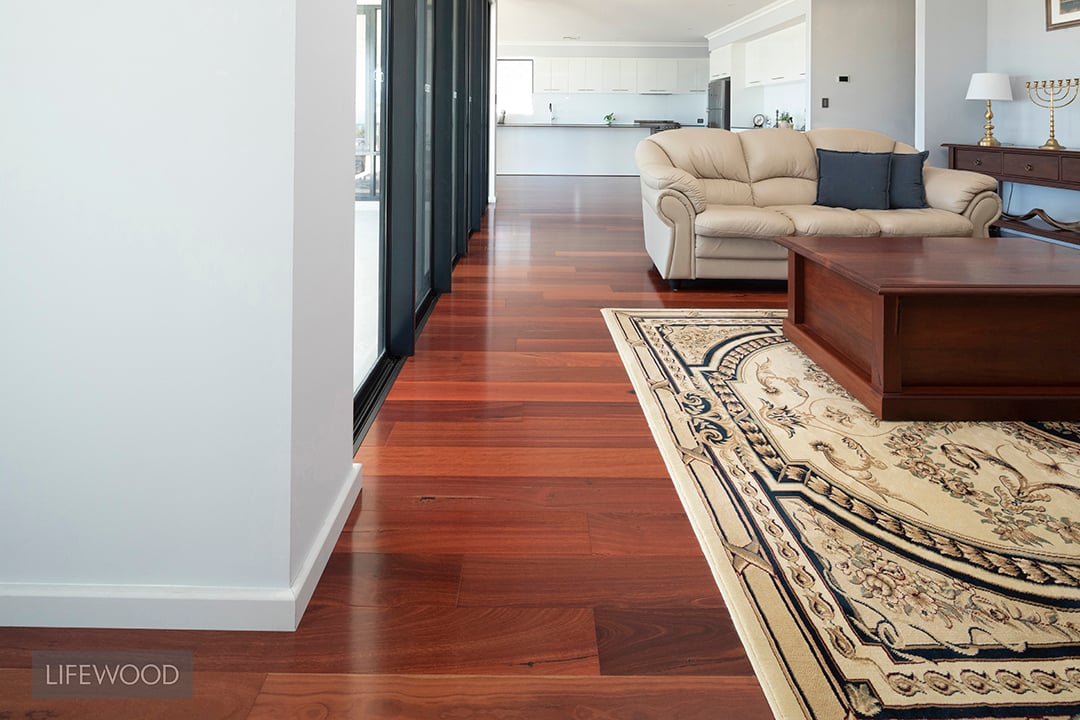
- Spotted Gum — about 11kN, very hard. Mid-brown with wavy grain.
- Grey Ironbark — about 14kN, very hard. Pale grey-brown.
Notice the trade running through that list. The harder the Australian species, the lighter the colour. There is no timber that is both very hard and naturally chocolate-dark.
So if dark is the brief, walnut is the answer and the care habits above are the price. If dark is negotiable, a harder species costs less and takes more punishment. Compare the dark options properly in our guide to dark timber flooring in Perth.
Walnut hardness FAQs
Will my dog's claws ruin a walnut floor?
A small or medium dog with trimmed claws, no. A large dog that skids on hard floors will leave marks on walnut sooner than on Spotted Gum. Runners in the racing lanes solve most of it.
Do dents mean the floor is wearing out?
No. A dent is a compression mark, not wear. The finish and the wear layer are both intact, and a future re-sand removes it entirely.
Does a harder finish make walnut harder?
No finish increases timber hardness. Finishes resist scratching and staining. The species sets the dent resistance, and nothing you put on top changes that.
Is 4.5kN hard enough for a kitchen?
Yes, with normal care. Kitchens see spills and dropped objects more than heavy traffic, and the bigger risk in a kitchen is standing water, not hardness. Wipe spills promptly and the floor is fine.
Come and try to dent it
The most useful thing you can do is stop reading numbers and stand on the timber. Walk the walnut boards at the Osborne Park showroom, drop your keys on them, and judge the hardness question for yourself.
Still weighing it up from home? Download the price guide and bring your toughest questions with you when you visit.