Engineered Timber Flooring
Timber Flooring Perth
Care and Installation

Hybrid flooring's main disadvantages are that it's mostly PVC plastic, it moves quickly with heat, and its timber look is a printed image that can't be sanded back. Its warranties also exclude many conditions found in ordinary Australian homes. That's why Lifewood doesn't sell it.
We make real timber floors instead. Our Stabilised Solid® boards carry a 4–5mm timber wear layer that can be sanded back three to four times over the life of the floor, and we've delivered 9,694 floors since 2002.
Hybrid has its place. It's affordable, quick to lay and copes with spills better than timber. For a rental or a short-term renovation it can be a sensible choice. It just isn't built to last the life of a family home, and that's the only kind of floor we make.
Weighing up hybrid against real timber for your own home? Tell us about the room and we'll tell you honestly which floor suits it. Prefer to see it first? Book a showroom consultation, or download the 2026 price guide.
Sonja, an interior designer in North Coogee, chose hybrid because she has two dogs and worried that timber would scratch.
"It didn't end up working for us," she says. "It started to lift in places."
She pulled it out and replaced it with real timber. In this two-minute video she explains why.
Sonja on replacing her hybrid floor with Nordic Forest French Oak (2 minutes 17 seconds).
"We've never sold hybrid at Lifewood because we only choose to sell natural timber floor products," says founder Mark Hutchison. "We want to sell authentic and real products, and we don't believe hybrid suits the Lifewood values. We also know it has warranty and industry-related problems. It's sold as a very cheap commodity, and it's made principally of plastic, so we chose not to supply it."
Most hybrid flooring is rigid vinyl: a core of PVC plastic mixed with ground limestone, with a printed image of timber on top. The Australasian Timber Flooring Association (ATFA) describes hybrid as an Australian marketing term for rigid planks that are predominantly plastic, and notes that many timber-look products contain no timber at all (ATFA).
A typical hybrid plank has four layers:
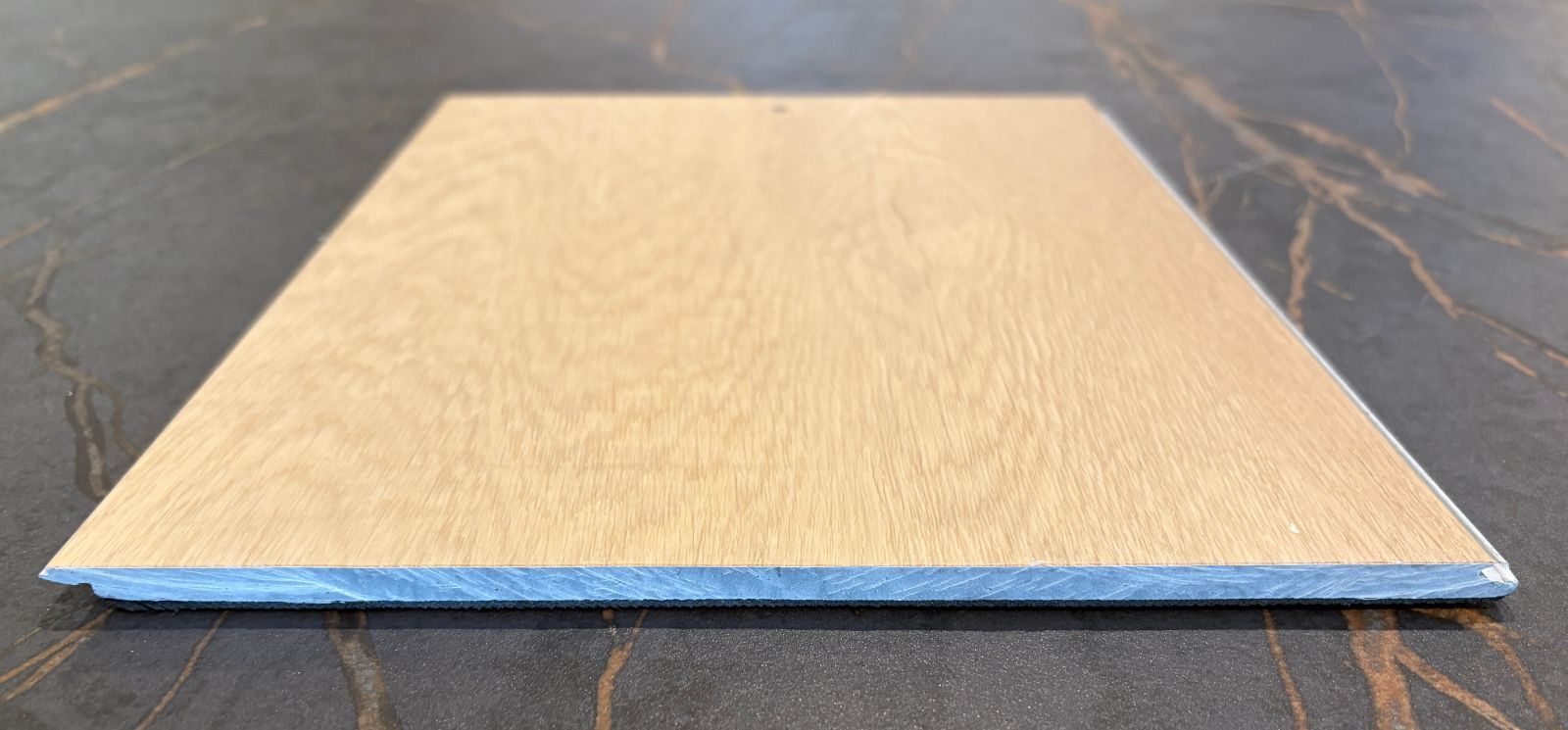
A hybrid (SPC) plank seen side-on. The oak is a printed layer on a grey stone plastic core, with foam underlay attached underneath. Photo: Mark Hutchison.
The planks click together and float over the subfloor rather than being fixed to it. Because the timber look is a printed layer, it can't be sanded or refinished. When it wears through or gets gouged, the plank is replaced.
Hybrid sells well for real reasons. These are its genuine advantages.
Its limits are what the rest of this post is about: heat, a printed surface you can't renew, and warranty fine print.
Hybrid moves with temperature rather than humidity. ATFA explains that plastic flooring expands quickly in heat and direct sun and shrinks quickly when the temperature drops, and the failures it lists are buckling, board deformation, joint damage and gapping (ATFA, Common issues emerging with hybrid flooring).
To be fair to hybrid, ATFA treats most of these as preventable with careful installation and climate control. Its guidance is to hold the room at 15–25°C and shade direct sun before and after laying (ATFA). So a hybrid floor performs well only while the conditions in your home stay inside that narrow band.
Yes, and fast. One major Australian retailer's care guide warns that floor-to-ceiling windows in Australian sun "can create floor surface temperatures over 70°C" (Carpet Court). A Perth living room with west-facing glass on a February afternoon is exactly that room.
The clearest evidence about how hybrid behaves is in its own warranty fine print. These conditions come from hybrid warranties and care guides published by Australian sellers:
Notice who carries the risk. A home with big north- or west-facing glass, an open-plan living area and a kitchen island is the home these exclusions are written around.
A Lifewood floor is glued directly to the slab, so there are no click joints to fail. "We've been installing Stabilised Solid® under big windows in WA homes for over 15 years," says Mark. "Coastal homes, hills homes, and many homes with floor-to-ceiling windows four and five metres high, and it's been fine. It does change colour, so it's something to be mindful of."
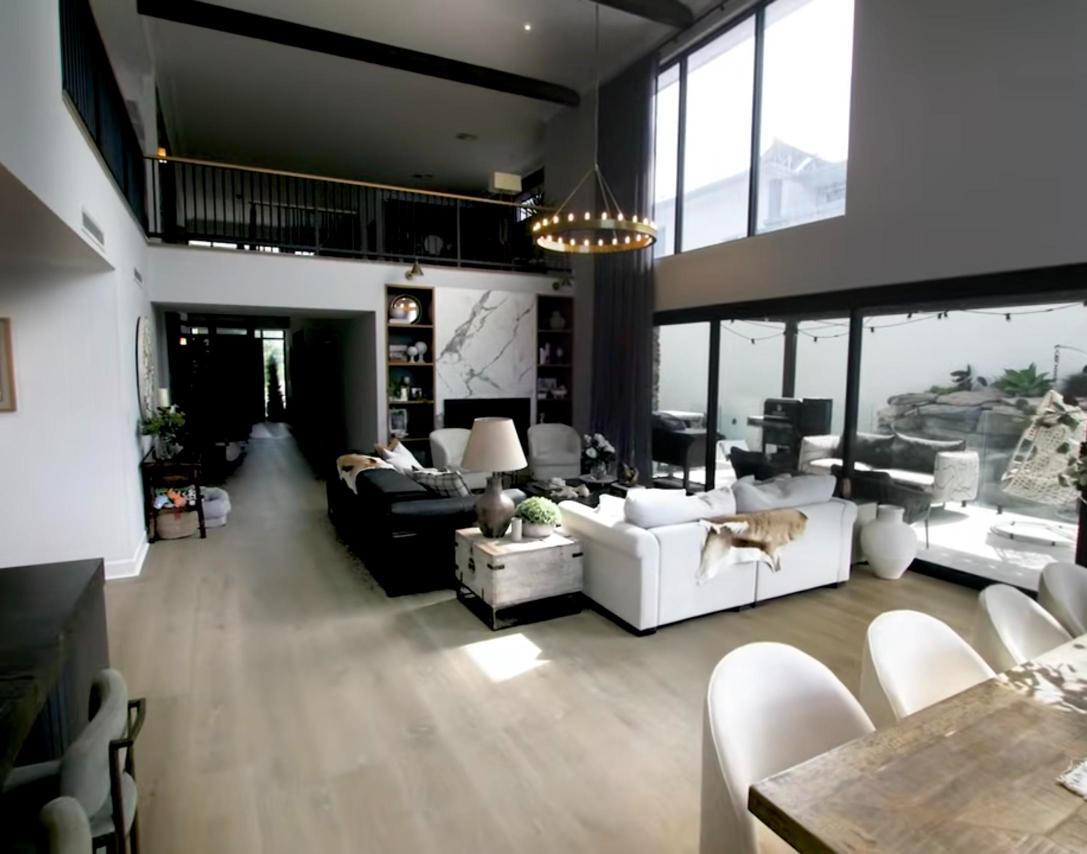
Stabilised Solid® Nordic Forest under double-height, floor-to-ceiling glass in a North Coogee home.
Like any real timber, the surface mellows in strong sun over the years. If a room takes a lot of direct light, look at how your chosen colour ages before you decide.
Calling hybrid toxic goes further than the evidence. But hybrid is a PVC plastic product, and research has linked some additives used in PVC flooring, especially phthalates, to higher chemical exposure in young children.
In fairness, many large retailers have phased out the most studied phthalates since 2015, and rigid hybrid generally contains less plasticiser than older soft vinyl. These studies show associations. They don't prove that a particular floor will harm a particular family.
If you're still weighing up hybrid, ask the seller three things in writing: a third-party indoor air emissions certificate for the exact product, confirmation that it contains no ortho-phthalates, and whether the core contains recycled PVC.
The difference that matters most is the wear layer: what you actually walk on, and what happens when it wears. Here's a typical hybrid (SPC) floor next to Lifewood Stabilised Solid®.
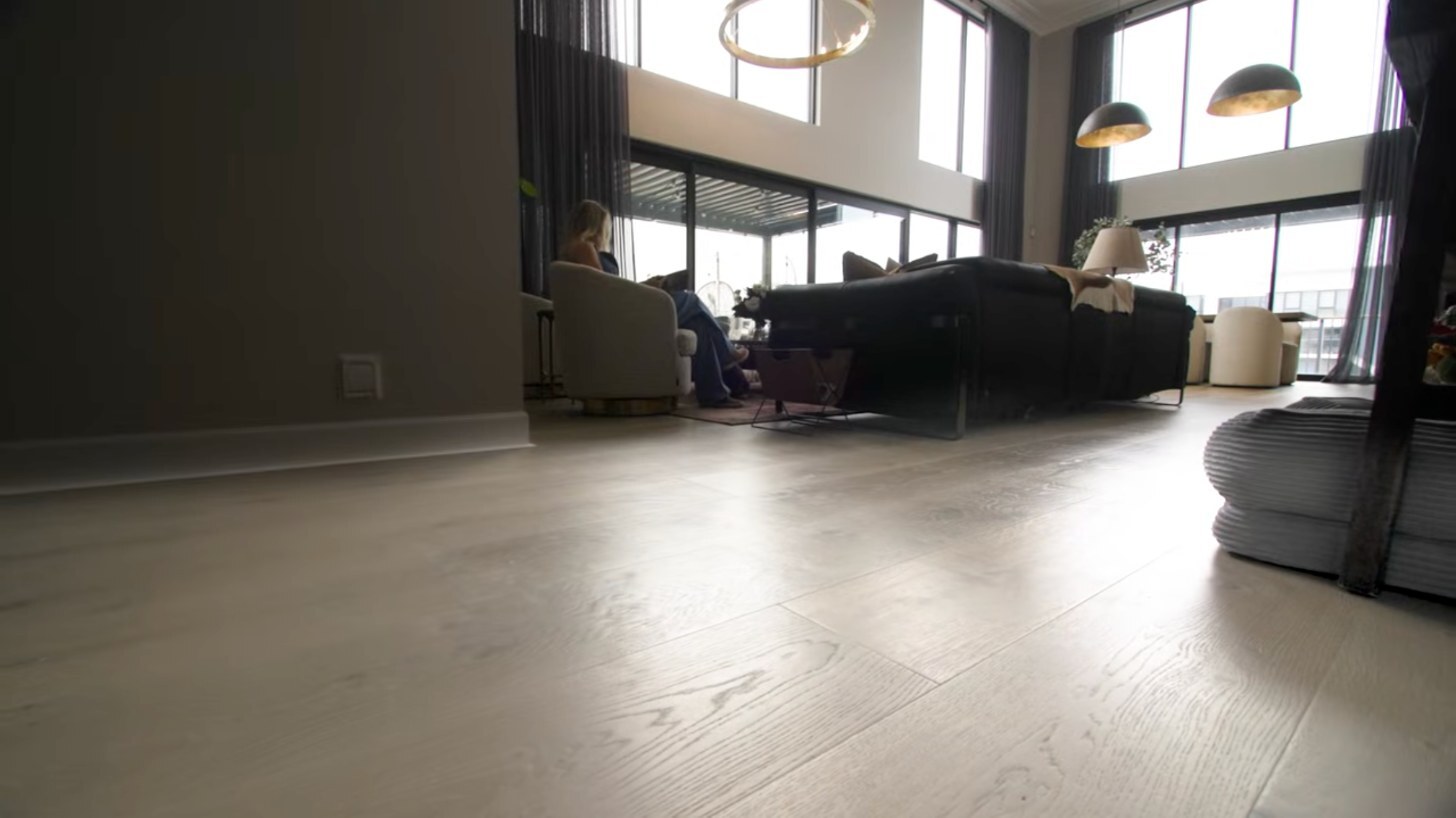
Real oak grain on 260mm Nordic Forest boards. A hybrid plank prints a photograph of this.
If you're comparing hybrid with another engineered timber, ask how thick the timber wear layer is. That one number tells you how many times the floor can be renewed. For the difference between solid and engineered boards, see solid vs engineered timber flooring.
Sound is the complaint we hear most from people replacing a hybrid floor. Hybrid floats: the planks sit on a foam underlay, loose over the slab rather than fixed to it. Footsteps on a floating floor sound light and hollow.
A Lifewood floor is glued directly to the slab, with nothing loose underneath. Footsteps sound quiet and solid, and the floor feels warm and firm underfoot.
If your slab is already tiled, a glued floor can often go straight over the tiles, as long as they're sound. Here's how to tell whether you can lay timber floorboards over your tiles.
"Sound is one of the biggest things customers tell us about hybrid," says Mark. "If a floor sounds hollow, it sounds cheap. If it sounds solid, it feels expensive. That feeling of quality comes from a solid floor."
"What most premium customers say is the sound," he says. "Hybrid is considered a throwaway floor. In a home worth a million dollars or more, a plastic floor that sounds hollow when you walk on it doesn't give you the feeling of prestige or value."
If you're comparing floors in a showroom, take your shoes off and walk on each one. You'll hear the difference before you see it.
Timber floors were the default in Australian homes for generations because they last. We're now seeing more customers come in to replace hybrid floors, particularly in premium homes. They were sold a hybrid floor, and once they've lived on it, it sounds and looks fake.
Mark sees hybrid as a temporary floor. "It's often put in by people on tighter budgets who are just trying to make their home look nice. When they have the money, they'll often pull that floor out and replace it with a real timber floor that has the look and feel of classic timber."
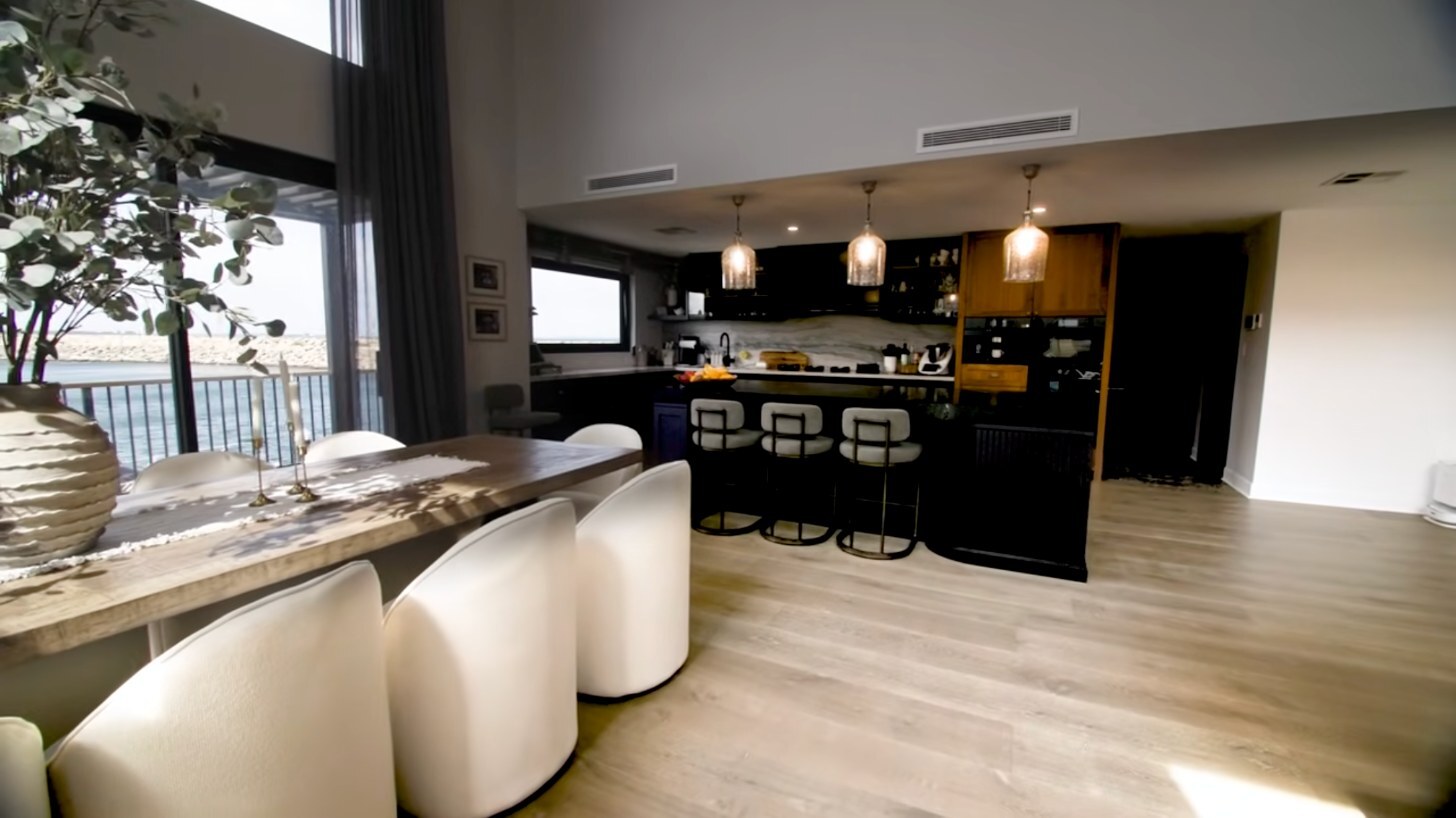
Sonja, from the video above, always wanted a hardwood floor. When her hybrid started lifting, she replaced it with Lifewood's Nordic Forest: Stabilised Solid® Vintage French Oak in 260mm wide boards, hand finished and hand stained to the Nordic Forest colour, laid through the living areas and up the stairs.

Sonja at home in North Coogee.
What changed her mind was a visit to our showroom. When she raised the dogs, our consultant took a fork to a piece of timber to show her how the surface stood up.
"It was definitely the defining factor," she says.
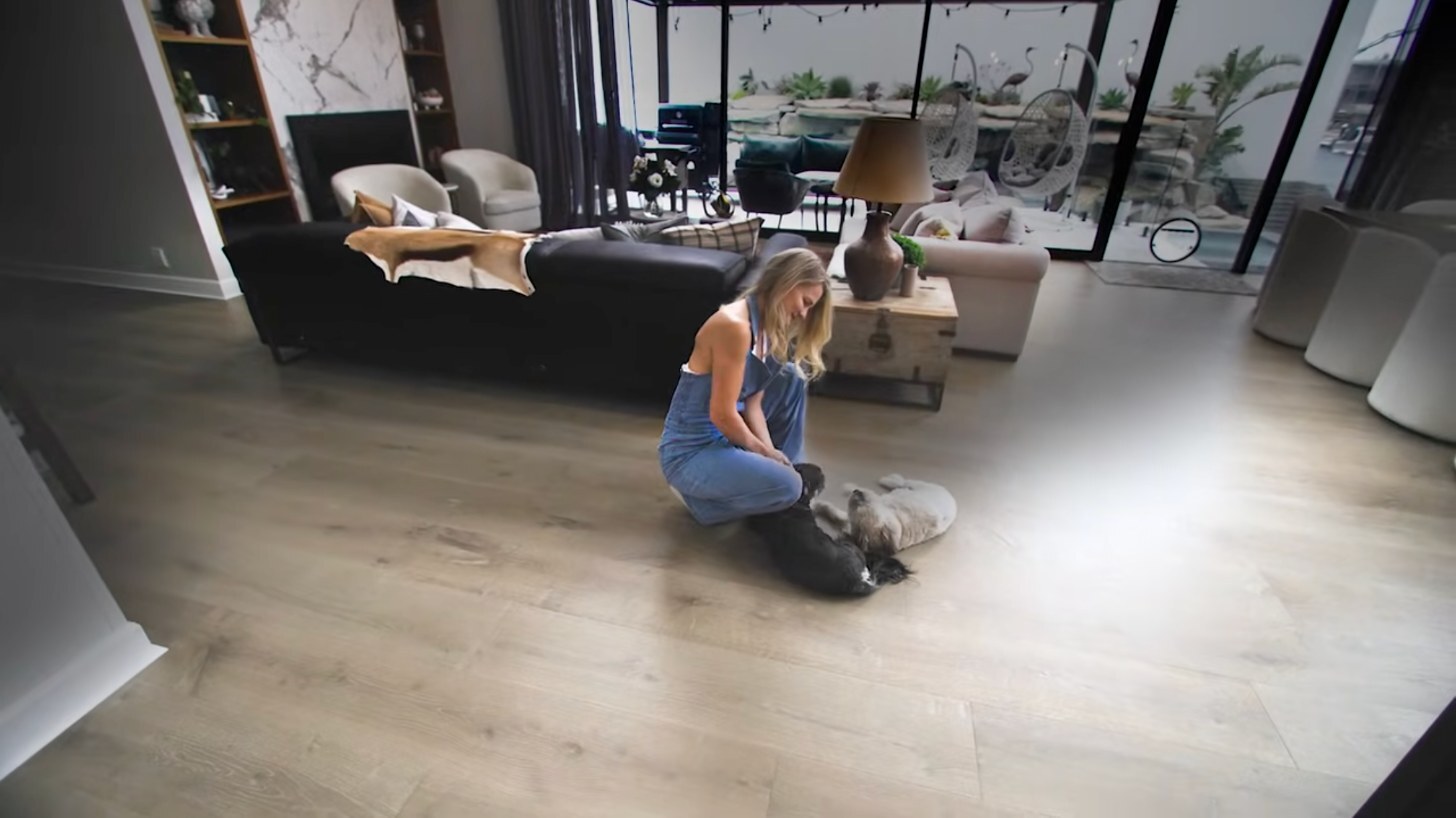
Six months on, with the dogs running on it every day: "If I knew from the start that I could actually get a timber floor that's not going to scratch with the dogs running on it, I would have gone with that from the very start."
Real timber can still mark. The difference is that a timber surface can be sanded back, and a printed one can't.
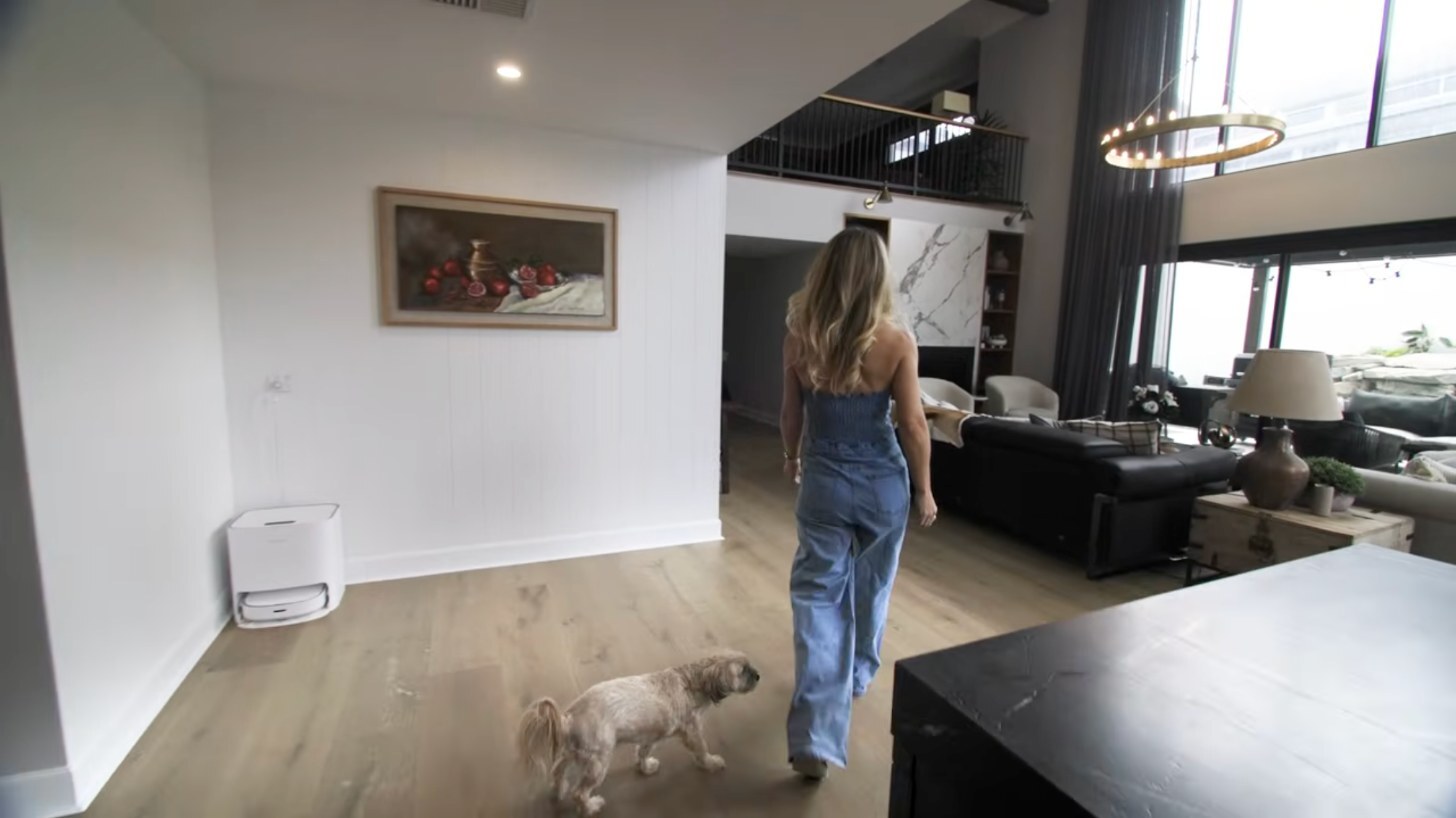
Six months of dogs on Nordic Forest French Oak.
The biggest difference was underfoot. "The best thing for me about this flooring was probably the first time I walked on it," Sonja says. "That solid feel was just so much better than the previous floor."
Try it yourself. Order a sample and give it Sonja's fork test at home, or book a time at our Osborne Park showroom and walk on real timber.
Lifewood boards range from $129/m² to $259/m², boards only, GST included, depending on species and board width. Hybrid typically costs $58–$125/m² supplied and installed in Perth (What's the Damage, November 2026), so even installed hybrid usually costs less than Lifewood boards alone.
The difference buys a floor you can sand back and renew, with a lifetime structural warranty on Stabilised Solid®. Our 2026 price guide breaks the range down by species and width, and why hardwood floors cost more explains where the money goes.
If your budget is set by hybrid prices, a general flooring retailer will serve you better, and we'd rather tell you that now than after you've driven to Osborne Park. If you want a floor that will still look right in 30 years, come and see ours.
Customers regularly ask Tony George, our general manager, whether we have hybrid. The honest answer is no. "We only make and sell handcrafted natural timber floors made from real wood," says Mark. "We don't install plastic floors or fake floors. Only real floors are sold at Lifewood."
That can disappoint people at first. Then they see what real timber gives them: no plastic core, a solid sound underfoot, and a surface that can be sanded back in years to come.
We make one kind of floor: real timber, glued to the slab, built to be sanded back and kept.
No Australian study has measured what flooring type does to a sale price, so be wary of anyone quoting a percentage. The best evidence is American. In Zillow's analysis of 2.8 million US home sales, listings that mentioned hardwood floors sold for about 2% more than expected, while listings that mentioned new carpet showed no effect (Zillow, 2016). It's an association, and it doesn't prove the floor caused the higher price.
The stronger argument is lifetime cost. When a hybrid floor's printed layer wears through, there's nothing underneath to bring back, so it's pulled up and replaced. A Stabilised Solid® floor is sanded and recoated instead. In a typical home that means a recoat every 10 to 15 years and a full resand somewhere between 10 and 20 years, depending on how much traffic the floor takes. Compare the cost per decade, not the price per square metre in the showroom.
Bring the plans for your hardest room, the one with the big glass or the dogs, to our showroom at 1/18 Hector Street West, Osborne Park. Appointments take 30–45 minutes and Tony can usually quote the same day. Book a showroom consultation, send us an enquiry or call (08) 9445 9011. Prices for every species and width are in the 2026 price guide.
No. Every Lifewood floor has a real timber surface you can sand back. If hybrid is the right floor for your project, a general flooring retailer will serve you better.
Hybrid is cheaper than timber, typically $58–$125/m² supplied and installed in Perth. It clicks together over the subfloor with no glue, copes well with spills and gives a consistent printed look. That makes it a sensible choice for rentals and short-term renovations.
Hybrid floats on a foam underlay over the slab rather than being fixed to it, so footsteps sound light and hollow. A timber floor glued directly to the slab has nothing loose underneath, so it sounds quiet and solid.
Calling hybrid toxic goes further than the evidence. Hybrid is mostly PVC plastic, and research has linked some PVC flooring additives, especially phthalates, to higher exposure in young children. Ask for a third-party emissions certificate and confirmation of no ortho-phthalates for the exact product before you buy.
Yes. ATFA explains that hybrid moves with temperature rather than humidity, expanding quickly in heat and direct sun and shrinking when it cools. Retailer guides say floor-to-ceiling glass can push floor surfaces above 70°C, and hybrid warranties require blinds in sunny rooms.
A hybrid floor lasts until its printed wear layer wears through or planks are damaged. Then the planks are replaced, because the surface can't be sanded or recoated. A Lifewood Stabilised Solid® floor is recoated every 10 to 15 years and can be sanded back three to four times over its life.
No. A hybrid floor's timber look is a printed image under a thin clear wear layer, so it can't be sanded or refinished. Worn or damaged planks are replaced. A Lifewood Stabilised Solid® floor can be sanded back three to four times over its life.
Hybrid costs less and copes better with spills. Timber with a thick wear layer lasts longer, can be refinished, and doesn't move with every change in temperature. For a family home you plan to stay in, we think timber is the better floor.
Lifewood boards range from $129/m² to $259/m², boards only, GST included. The price depends on species and board width. Book a showroom visit for a quote on your project.
Come and stand on it.
Our flooring consultants are here to answer your questions, in person or on the phone.