
"Am I looking for a quick fix floor that will do the job for now, or is my floor an investment for the future?"
In the timber flooring industry there are two timber flooring installation methods: direct stick and floating. Both timber flooring installation methods are excellent in the right situation, but many retailers will recommend whichever one suits them rather than you. This guide explains the difference between the two timber flooring installation methods so you can choose the one that genuinely matches how you want your floor to look, feel and last. Whether you want a permanent investment floor or a flexible solution for a rental, understanding timber flooring installation is the first step to a floor you will love.
Method 1: Direct Stick
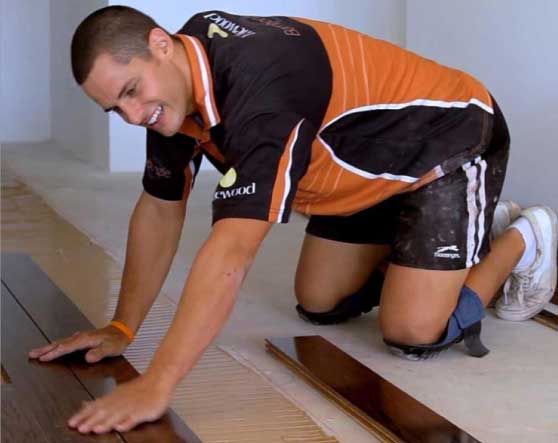
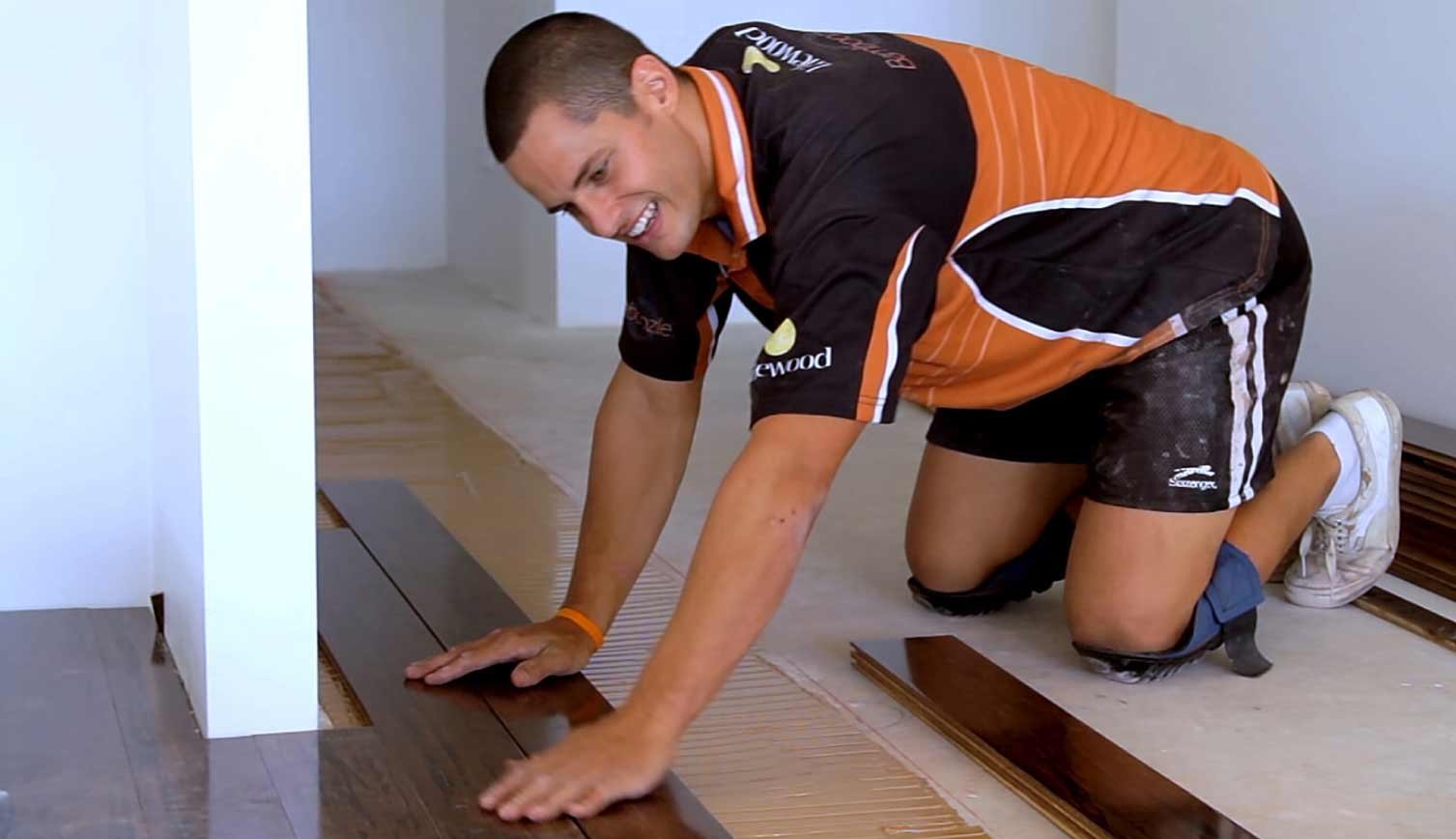
A permanent, long-term floor glued straight to the substrate.
A direct stick floor is installed by gluing each individual board directly to the concrete or timber substrate. If you are laying solid timber the boards are also nailed down to restrain the floor from cupping, while engineered boards do not need nailing because they do not move like solid timber. Direct stick is a craft that needs a highly skilled professional, because the strong glue leaves little room for error. The reward is a floor that can be re-sanded and polished many times over its life.
Design Tips
- Choose direct stick for a forever home where the floor is a long-term feature.
- Allow time for proper subfloor prep, as moisture sealing is essential.
- Pair direct stick with solid or engineered timber for a floor that holds value.
Method 2: Floating
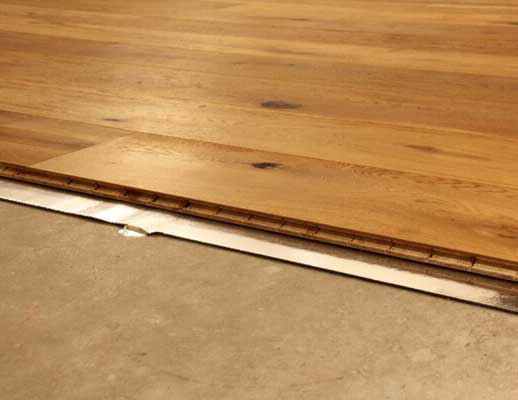
Quick to lay, easy to lift, ideal for temporary spaces.
A floating floor is not glued or fixed to the substrate at all. Boards click together with a tongue-and-groove system, or are glued edge to edge, and sit on a foam underlay over a plastic moisture barrier. That underlay cushions the floor and protects against moisture, but without it the boards can creak and grind. Floating floors install fast, need little skill and let you lift and replace a single board easily, which makes them perfect for rentals and high-traffic temporary fit-outs.
Design Tips
- Choose floating for rentals or spaces you may change in a few years.
- Never skip the foam underlay, as it prevents creaking and moisture issues.
- Expect some hollow footfall echo, which suits low-traffic rooms best.
Direct Stick vs Floating: Which Lasts?
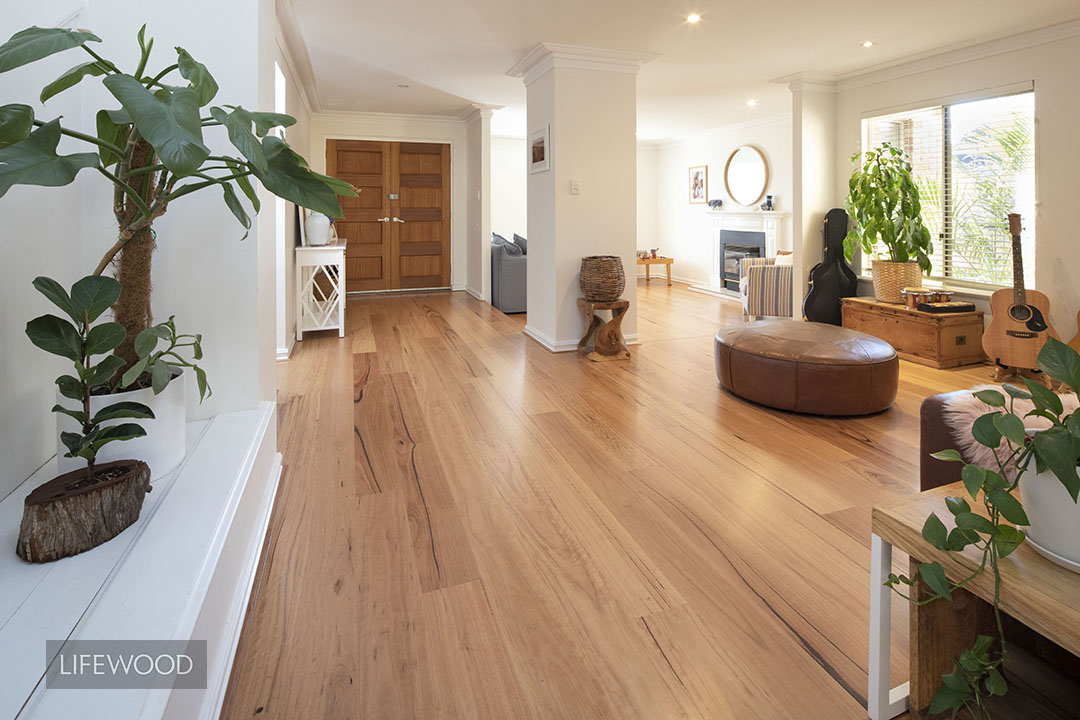
An investment floor, or a quick fix for now?
A direct stick floor looks and feels amazing, sounds solid with no hollow echo, holds its value and can be re-sanded multiple times, typically every 10 to 15 years. It is also more resistant to water when installed correctly. A floating floor is quicker and cheaper and easy to repair, but it cannot be sanded and will not keep its look for as long. A good quality natural timber floor that has been direct stuck is an investment that can last generations. Explore our French Oak hardwood flooring range to see the difference quality makes.
Design Tips
- Match the method to your timeframe, not just the upfront price.
- Factor in re-sanding when comparing the lifetime cost of each method.
- Ask your installer about subfloor moisture testing before you commit.
Plan Your Timber Flooring Installation
Visit our Osborne Park showroom to walk on the floors and talk methods with our consultants, or download the 2026 price guide and discover the price of your floor, fully installed.
BOOK AN APPOINTMENT DOWNLOAD 2026 PRICE GUIDE
Visit Our Perth Showroom
Chat with our timber flooring consultants and walk on our Australian timber and French oak floors at 18 Hector Street West, Osborne Park, Perth.
BOOK A CONSULTATION
Know Your Price
Download our 2026 price guide to discover the cost of your timber flooring installation, fully installed.
DOWNLOAD NOWTimber Flooring Installation FAQs
What are the two timber flooring installation methods?
There are two main timber flooring installation methods: direct stick and floating. Direct stick glues each board to the substrate for a permanent floor, while a floating floor clicks together over an underlay without being fixed to the subfloor.
How do you install timber flooring with the direct stick method?
Direct stick installation glues every board directly to a concrete or timber substrate, and solid boards are also nailed to stop cupping. The subfloor must be cleaned, sealed with a moisture barrier and ground flat first, so it should be done by a skilled installer.
How do you install a floating timber floor?
A floating floor is laid over a foam underlay and plastic moisture barrier, with boards joined by a click tongue-and-groove system or glued edge to edge. It is not fixed to the subfloor, which makes it quick to install and easy to lift and replace.
Is direct stick or floating better for timber flooring installation?
Direct stick is best for a permanent, long-term floor because it can be re-sanded, holds its value and resists water damage. Floating suits temporary or rental spaces, but it cannot be sanded and can produce a hollow footfall echo.
Can engineered timber flooring be direct stuck or floated?
Yes. Engineered timber flooring can be either direct stuck or floated. Because engineered boards are dimensionally stable and do not move like solid timber, they do not need to be nailed down when direct stuck.
How much does timber flooring installation cost?
Timber flooring installation cost depends on the method, the board type and the amount of subfloor preparation required. Direct stick needs more prep and skill, so it usually costs more than a floating floor. Download our 2026 price guide for fully installed pricing.
How long does a direct stick timber floor last?
A well-installed direct stick solid timber floor is built to last generations. It can typically be re-sanded and polished every 10 to 15 years to refresh its look, which is something a floating floor cannot offer.