Engineered Timber Flooring
Timber Flooring Perth
Care and Installation
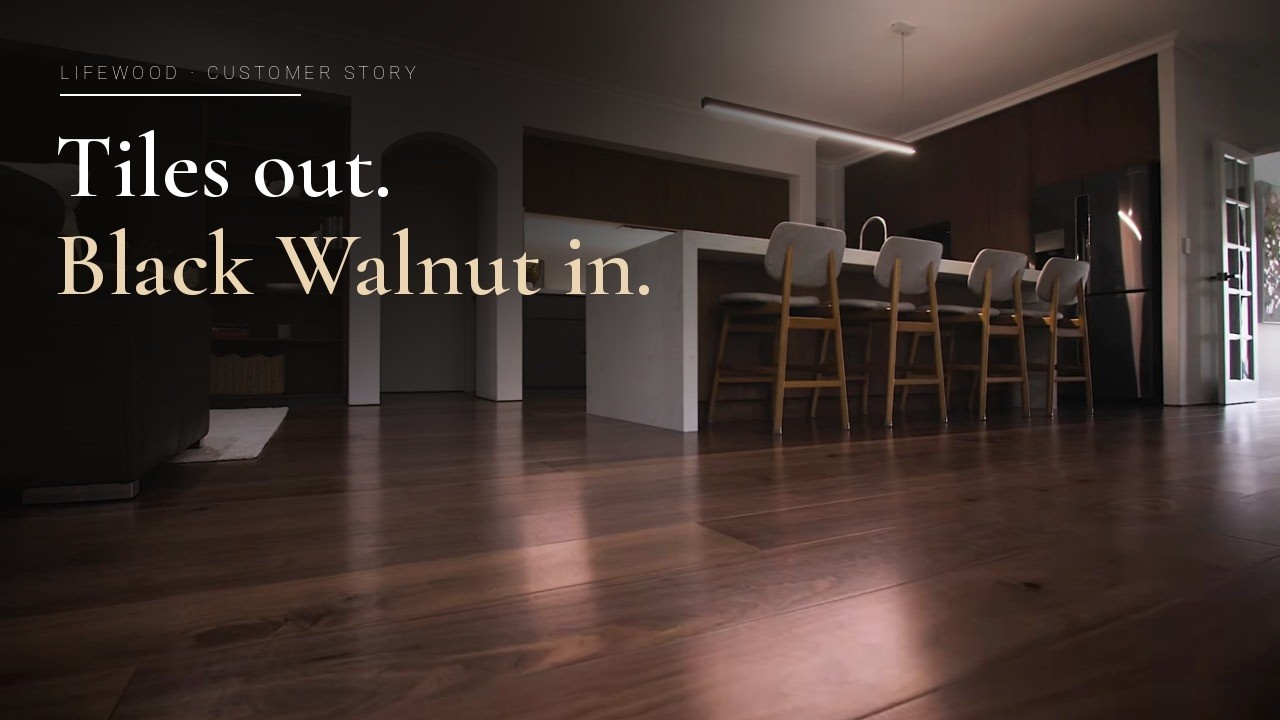

A timber floor sounds hollow when there is air between the boards and the floor underneath. Floating floors sit loose on an underlay, so every footstep has a small gap to drum against. Every Lifewood floor is glued straight down, so there is no gap to drum.
Karinda in Canning Vale had lived with white tiles for years. She wanted timber, but not the hollow sound she grew up with. This is her American Black Walnut floor, 220mm wide boards glued directly to the concrete slab, in her own words.
What Karinda says in her interview:
Want to know what a floor like this costs? Download the 2026 Lifewood price guide.
Tiles still down? Tell us about your floor and we'll tell you what it needs, or book a showroom consultation to see walnut in person.
Floating floors sound hollow because the boards rest loose on an underlay, and the air gap underneath drums under every footstep.
Karinda's parents had laminate. What she remembers is the sound.
"I didn't like the sound… it was very hollow."
Laminate and hybrid both do it. The boards click together on foam or rubber. Nothing holds them down. They flex slightly under a foot, and the space beneath acts like a drum skin.
The Australasian Timber Flooring Association says the same in its guidance on hollow sounds in timber floors: floating floors are naturally drummy throughout because they aren't fixed to the subfloor. On a glued-down floor, the odd board can still sound hollow where the slab dips and the adhesive is thicker. ATFA treats that as normal unless the board moves under your foot.
Her floor works differently. "What we've got with Lifewood, it's been glued right onto the concrete slab, which wouldn't give us that hollowy sound."
Glued down, the board and the slab move as one. A footstep lands on something that doesn't flex, so it sounds like a footstep and nothing more. In a house with "a lot of people" and dogs, that was the point.
Lifewood founder Mark Hutchison puts it simply: "If a floor sounds hollow, it sounds cheap. If it sounds solid, it feels expensive."
When tiles come out, the concrete slab underneath is ground back, patched and levelled to within 3mm over 3m before any timber is glued down.
Karinda's tiles came out, and her boards went down on the bare slab. Our site inspection checks the slab's flatness and moisture before the boards arrive.
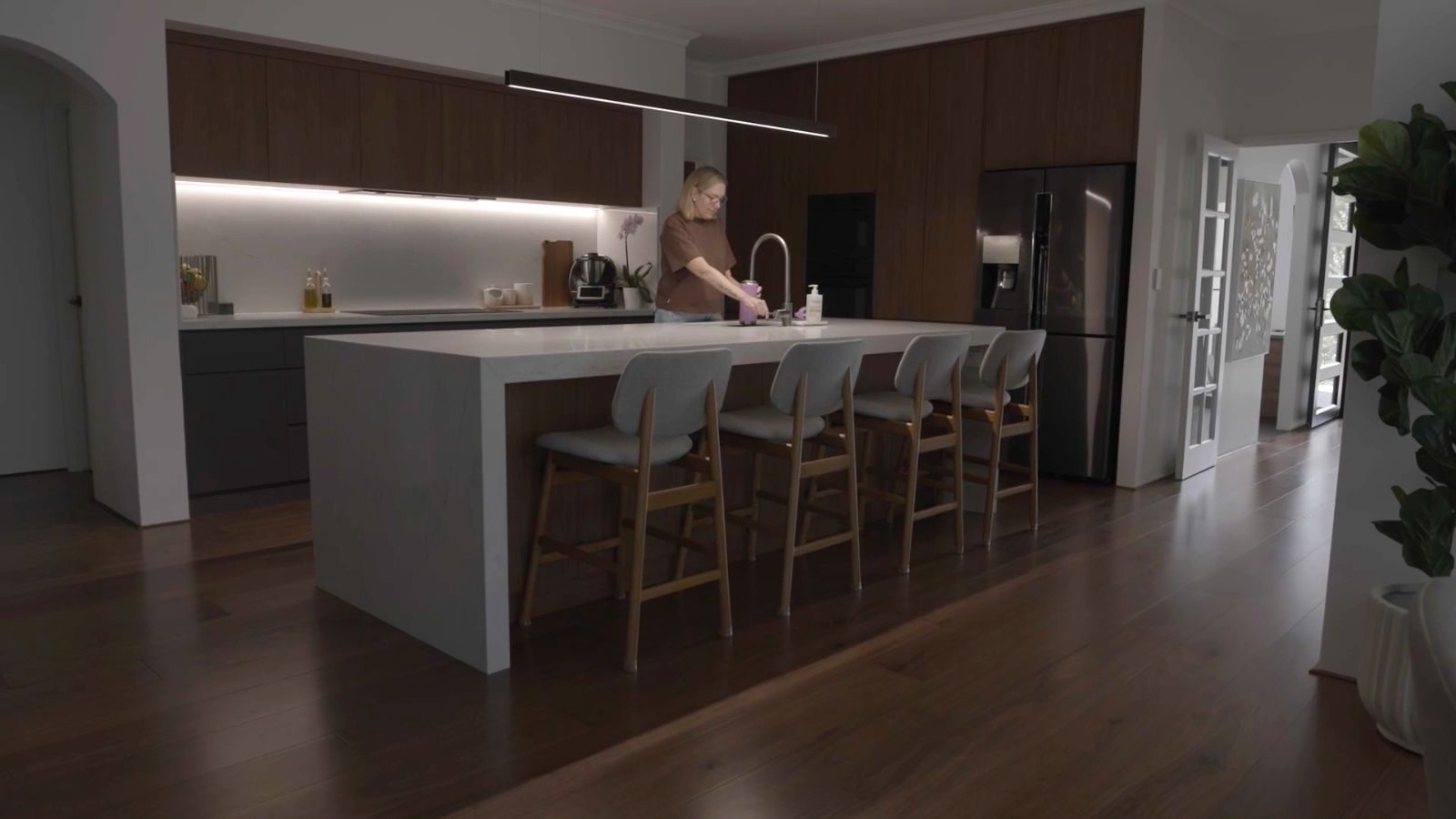
Before any timber went down, the slab was ground back and patched. Laying the floor itself took three and a half days. "I was here the day that it was getting installed over the three days," Karinda says. "Seeing it all done was amazing."
Thinking of keeping your tiles instead? Can you lay timber floorboards over tiles? covers when that works, and when the tiles should come out.
More on what happens before a single board is laid: floor preparation at Lifewood.
American Black Walnut suits a long, open house because its tones run from milk-chocolate brown to near-black, so every 220mm board looks a little different.
Karinda went to the showroom with another colour in mind. "When I saw this one on the shop floor, I was like, 'Yep, I think that's what I want.'"
What sold it was the variation. "Love the colours, the different tones that you get through with this." Lighter streaks of sapwood run through it. On wide boards that variation has room to show.
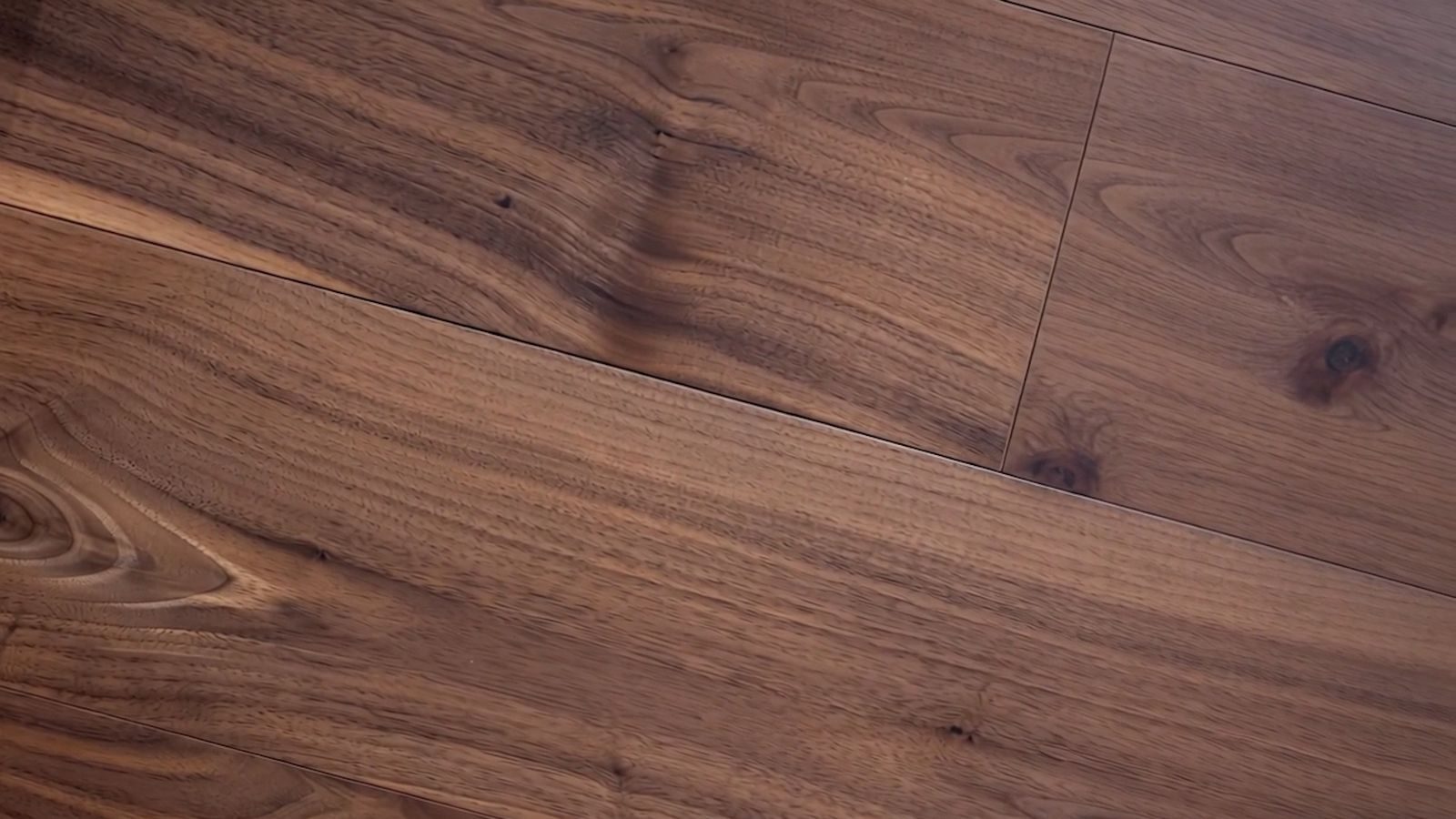
She hadn't been looking for walnut. A friend who designs kitchens put Lifewood on her list. She read reviews online, found a home on our website with the same floor, then saw it in the kitchen display at the Osborne Park showroom. Elsewhere, "everything was Jarrah". She wanted something different. "I haven't seen this one in any of the homes that I go to."
The width was deliberate. Her house runs in one long line from the front door to the back. "We thought if we went to the smaller plank, it just wouldn't look right." At 220mm, "each piece is different. You've got lighter pieces, a bit darker… it's almost like the wood's telling its story in the grain." Boards that wide stay flat because of Lifewood's Stabilised Solid® construction: 100% real timber over a cross-engineered core.
The board she chose is Lifewood's American Black Walnut:
One honest note. Walnut is 4.5kN on the Janka hardness scale, which makes it moderately hard. It's softer than Jarrah or Blackbutt. Karinda mentions "the dogs and their little paws". Claws click on any hard floor and can mark softer timbers over time. If the house has big dogs or heavy traffic, ask us to put walnut next to an Australian hardwood in the showroom so you can compare. Read more in Is Walnut Too Soft for Floors? The Janka Numbers, Honestly.
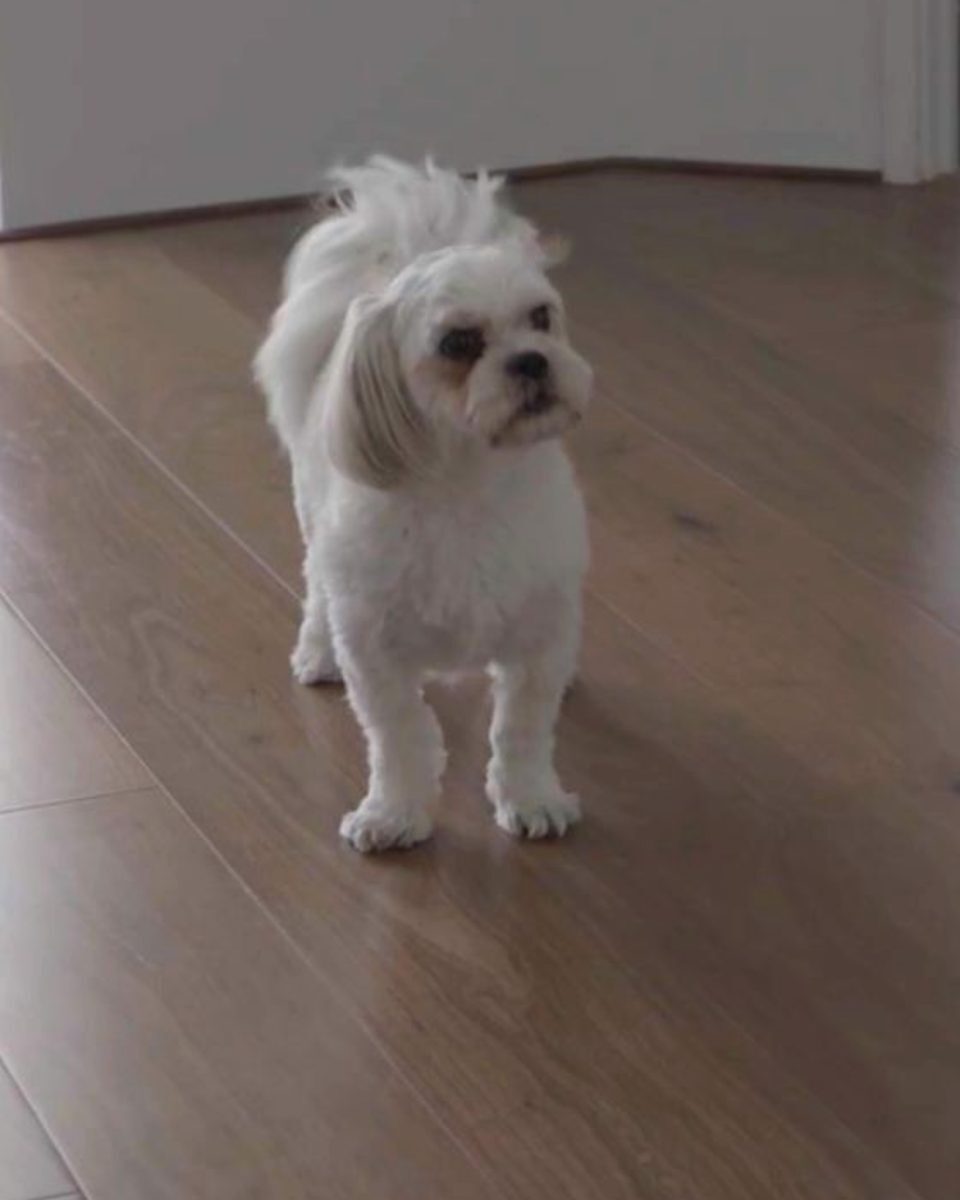
Karinda is honest about it too. "When you've got high volume of traffic coming in and out of your house, things are going to scratch." She's made her peace with that. "It's flooring that I love, and it's well lived in and it's well loved. A few little imperfections… that's just a story on the floor."
Walnut or a harder Australian species? Book a showroom consultation and see them side by side in Osborne Park, or order a walnut sample to try on your own floor.
Questions about your own slab? Ask us about your floor.
A timber floor feels cool underfoot in a Perth summer and comfortably warm in winter.
Tiles stay cool, and that's one reason Perth homes have so many of them. Karinda didn't want to lose that. "Especially in summer here in Perth, it's nice to have that cool finish."
Mark Hutchison, Lifewood's founder, lives on a Blackbutt floor in his own home. "In summer it is definitely cool underfoot, and in winter it is not cold underfoot. It's actually quite warm," he says. "It's quite a neutral floor to have in your house, and very comfortable to live on in both hot and cold climates."
Karinda says replacing her tiles with walnut was worth it. Asked directly, her answer was "110%."
"Everybody who's come into the house since, they were just like gobsmacked that you could transform what we had to what we've got now." "It just feels like it's been here forever." Her son put it more simply: he can't remember the tiles now.
The family has lived in the house for almost 19 years. The renovation ran from February to October.
On the price: "We were realistic in that we were paying for a better quality floorboard. When they came in with the amount, it wasn't a surprise." What friends ask her most is how easy it is to look after. Her answer is that it's easier than the tiles were. "You know, the grout and whatnot. I didn't want to have to deal with that."
Before replacing tiles with timber, ask what is under them, how the slab will be flattened, and whether the boards will be glued down or floating.
See American Black Walnut at our showroom, 1/18 Hector Street West, Osborne Park. Take your shoes off and walk on it. You can also call (08) 9445 9011 or download the 2026 price guide.
Ready to talk about your own tiles? Tell us about your floor, or book a showroom consultation. A showroom visit takes 30–45 minutes, and Tony can usually quote the same day.
Because there is air under the boards. Floating floors, including laminate and hybrid, rest on an underlay without being fixed down, so footsteps drum against the gap. A floor glued down across a properly prepared slab has no air gap, so it doesn't drum the way a floating floor does.
Yes. Glue the boards directly to a flat, properly prepared slab so there is no air gap underneath. Every Lifewood floor is laid this way. Karinda's walnut floor went down on a slab that had been ground back and patched first.
$249 per m² for 220mm boards, boards only, GST included. Installation is quoted separately. The full range is in the 2026 price guide.
No. A timber floor feels cool in summer and comfortably warm in winter. Lifewood founder Mark Hutchison says his own Blackbutt floor is "quite a neutral floor", comfortable to live on in hot and cold weather alike.
Karinda's American Black Walnut floor took three and a half days to lay, after the slab had been ground and patched. Time on site depends on the floor area and the slab's condition. Allow time after laying for the adhesive to cure before furniture goes back.
It can be, if you don't mind some wear. Walnut is 4.5kN on the Janka scale, softer than Jarrah or Blackbutt, so claws leave small marks over time. Karinda has dogs and calls the marks "just a story on the floor". For a harder surface, compare walnut with an Australian hardwood in the showroom.
Karinda finds it easier. With tiles she had grout lines to keep clean, and a timber floor has none. "You know, the grout and whatnot. I didn't want to have to deal with that."
Come and stand on it.
Our flooring consultants are here to answer your questions, in person or on the phone.
Still exploring? Download our price guide.